
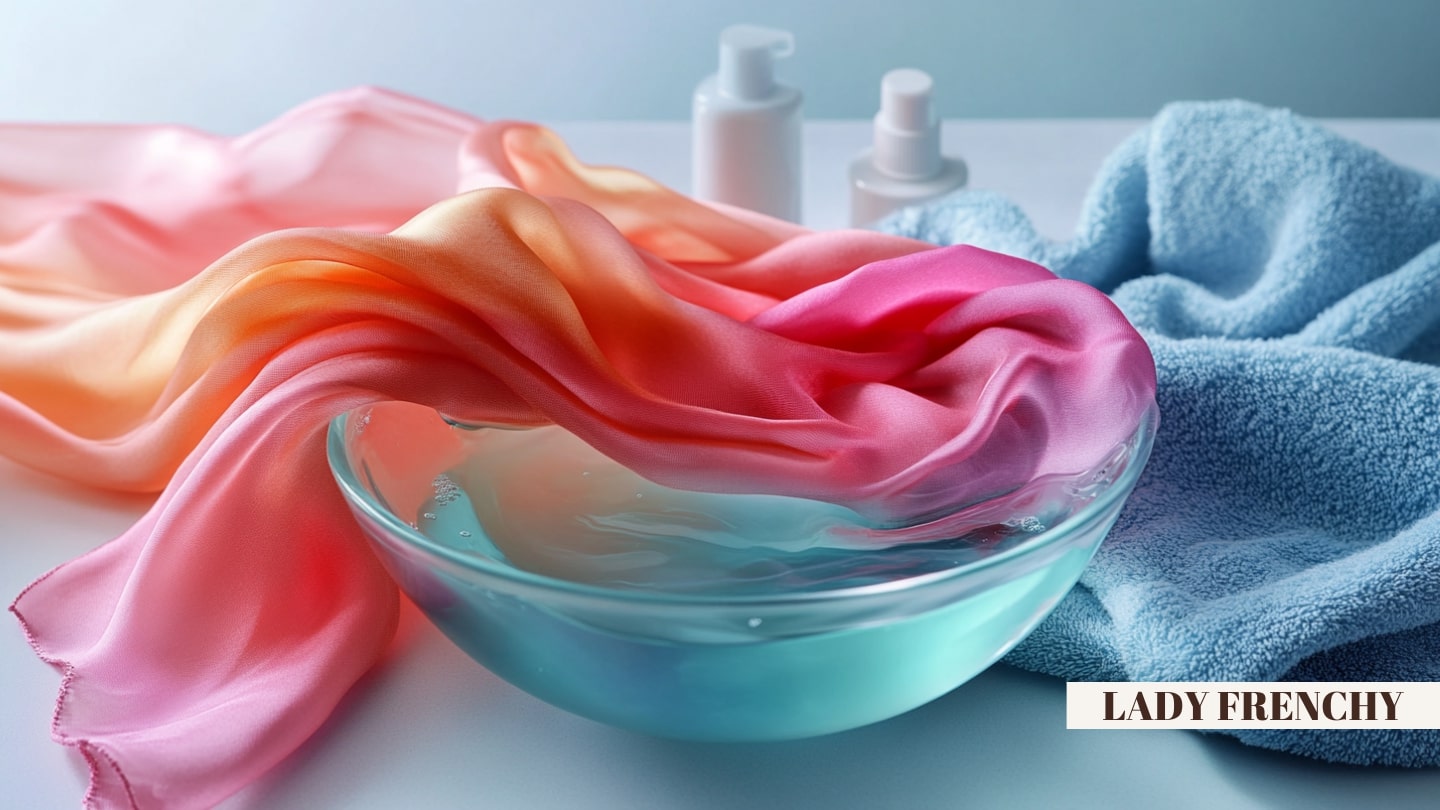
Introduction: Caring for Your Silk Scarf
A silk scarf is an elegant and delicate accessory that adds a touch of refinement to any outfit. However, silk is a fragile material that requires special care, especially when it comes to washing.
Knowing how to wash a silk scarf without damaging it is essential to preserve its beauty, softness, and natural sheen. An improper washing method can lead to irreversible damage: loss of luster, deformation, dulled colors...
In this comprehensive guide, we explain how to clean your silk scarf safely and effectively, whether by hand or machine, with all the necessary precautions to preserve this precious fabric.
For more tips on your silk scarves, consult our guide on what to wear with a silk scarf and discover how to remove odors from a silk scarf. 🧼✨

-30% discount with code BLOG30
Easy care guaranteed ✨
📖 Article Summary
- 1. Why is Silk so Delicate?
- 2. Before Washing: Essential Checks
- 3. Method 1: Hand Washing (Recommended)
- 4. Method 2: Machine Washing (With Caution)
- 5. Products to Use and Avoid
- 6. Drying: Best Practices
- 7. Ironing Your Silk Scarf
- 8. Treating Stains on Silk
- 9. Storage and Maintenance Tips
- 10. Conclusion: Preserved Silk
1. Why is Silk so Delicate?

Silk is a natural fiber produced by silkworms, valued for its incomparable softness, lightness, and sheen. But this nobility comes at a price: a fragility that demands special care.
🔬 Silk Fiber Structure
Silk is composed of proteins (fibroin and sericin) that give it its luster and softness. These proteins are sensitive to pH variations, heat, and mechanical friction, which explains its fragility.
⚠️ Why Silk is Sensitive
💧 Water Absorption
Silk rapidly absorbs water (up to 30% of its weight), which temporarily weakens its fibers. Wet fabric is more vulnerable to deformation and friction.
🌡️ Heat Sensitivity
Excessive heat (hot water, tumble dryer, too hot iron) can denature silk proteins, causing shrinkage, loss of sheen, and indelible stains.
🧪 Fragility to Chemicals
Conventional detergents, bleaching agents, chlorine, and harsh fabric softeners can dissolve or damage silk fibers. Alkaline pH is particularly harmful.
☀️ Light Sensitivity
UV rays can discolor and weaken silk fibers over time, hence the importance of drying in the shade.
That's why it's essential to master appropriate washing techniques to avoid altering the natural beauty of your scarf.
2. Before Washing: Essential Checks
Before any washing, perform these checks:
🏷️ Read the Label
Always consult the care label. Some silk scarves may require dry cleaning only, especially if they have special finishes or delicate prints.
🎨 Colorfastness Test
Test colorfastness on an inconspicuous corner: lightly dampen with a white cloth and press. If the color bleeds, opt for professional dry cleaning.
🔍 Stain Inspection
Locate stains before washing. Some require specific pre-treatment (see section 8).
📋 General Condition
Check the condition of hems and seams. A damaged scarf could further degrade during washing.
💡 When in Doubt
If your scarf is vintage, very precious, or if you have any doubts, entrust it to a dry cleaner specializing in delicate textiles. Better safe than sorry!
3. Method 1: Hand Washing (Recommended)

Hand washing is the safest method for cleaning a silk scarf:
🚿 Prepare the Water
Fill a clean sink or basin with cold or lukewarm water (maximum 30°C). Hot water could shrink or deform the scarf.
🧴 Add Detergent
Pour a small amount of special silk detergent or mild shampoo (baby or delicate hair). Mix to dissolve completely before immersing the scarf.
💧 Gently Immerse
Gently submerge the scarf in the soapy water. Let it soak for a maximum of 3-5 minutes. Never rub the fabric.
🤲 Wash Gently
Gently move the scarf in the water with soft back-and-forth motions. Squeeze lightly, without rubbing or twisting.
🚰 Rinse Thoroughly
Rinse with clear cold water until all soap is removed. Change the water several times if necessary.
🧺 Remove Excess Water
NEVER wring the scarf. Gently press it between your hands, then roll it in a clean towel and gently press to absorb moisture.
⚠️ Never Do This
- Twist or wring the scarf
- Rub the fabric
- Soak for more than 5 minutes
- Use hot water

-30% discount with code BLOG30
Quality and durability 👜
4. Method 2: Machine Washing (With Caution)

If you're short on time, machine washing is possible with strict precautions:
🧺 Use a Mesh Laundry Bag
ALWAYS place your scarf in a fine-mesh laundry bag to protect it from friction and snags with other garments.
⚙️ Select the Right Program
Choose your machine's "Silk," "Delicate," or "Hand Wash" program. This program uses reduced rotation and low temperature.
🌡️ Cold Temperature
It is imperative to set the temperature to a maximum of 30°C, ideally cold. A higher temperature would damage the fibers.
🔄 Minimal or No Spin
Disable spinning or select the lowest spin cycle (400 rpm max). Remove the scarf immediately after the cycle.
👕 Wash Alone or with Similar Items
Wash the scarf alone or with other delicate items of similar color. Never with jeans, zippers, or rough fabrics.
⚠️ Machine Washing Has Risks
Even with all precautions, machine washing poses more risks than hand washing. Reserve it for less precious scarves or in absolute necessity.
5. Products to Use and Avoid
The choice of products is crucial for preserving silk:
✅ Recommended Products
🧴 Special Silk/Wool Detergent
Formulated with a neutral pH, no enzymes or harsh agents. Recommended brands: Woolite, Le Chat Délicat, natural Marseille soap detergent.
🧴 Mild Shampoo
An effective alternative: a baby shampoo or one for delicate hair. The pH is suitable, and the formulas are gentle.
🧴 Pure Marseille Soap
Natural and gentle, it is perfectly suited for silk. Use it grated or as flakes diluted in water.
🧴 White Vinegar (Rinse)
Add a tablespoon of white vinegar to the last rinse water to revive colors and soften the fabric.
❌ Products to Absolutely Avoid
🚫 Never Use
- Regular detergent: Too aggressive, inappropriate pH
- Bleach / Chlorine: Destroys silk fibers
- Powerful stain removers: Can burn the fabric
- Fabric softener: Leaves a film that dulls silk
- Enzymes/whitening agents: Degrade silk proteins
6. Drying: Best Practices

Drying is a critical step to preserve shape and shine:
Never Tumble Dry
Heat destroys silk
Lay Flat to Dry
On a clean towel
In the Shade
Avoid direct sunlight
Well-Ventilated Area
Good air circulation
📋 Drying Method
- Blot dry: Roll the scarf in a clean towel and gently press
- Lay flat: On a dry towel, in its original shape
- Flip over: Halfway through drying, flip the scarf for even drying
- Do not hang: The weight of the water could deform the fibers
💡 Quick Drying Tip
If you're in a hurry, use a hairdryer on a cool setting from a distance (at least 30 cm) with gentle movements.
7. Ironing a Silk Scarf
Ironing restores shine and finish to your scarf:
🌡️ Low Temperature
Use the "Silk" setting or the lowest temperature on your iron. Excessive heat will irrevocably burn the fabric.
🧥 Protection
ALWAYS place a thin cloth (white cotton or pressing cloth) between the iron and the scarf to avoid direct contact.
💧 Slightly Damp
Iron the scarf when it is still slightly damp or spray it lightly beforehand. Creases are removed more easily.
🔄 On the Reverse Side
Preferably iron on the reverse side of the scarf to protect the visible side and preserve its sheen.
💡 Alternative: Garment Steamer
A vertical garment steamer is ideal for silk. Hold the scarf suspended and steam from a distance (10-15 cm). Gentler than ironing!
8. Treating Stains on Silk
Act quickly, but gently:
🍷 Wine/Juice Stain
Immediately dab with a cloth soaked in sparkling water. Do not rub. Then wash normally.
💄 Makeup Stain
Gently apply a little Marseille soap to the damp stain. Let sit for a few minutes, then rinse with cold water.
🛢️ Grease Stain
Sprinkle with talcum powder or cornstarch, let absorb for 30 minutes, then gently brush off. Then wash.
🖊️ Ink Stain
Dab with a little warm milk or very diluted 70° alcohol. Test on a hidden corner first.
⚠️ Golden Rule for Stains
Never rub a stain on silk. Always dab from the outside in to avoid spreading the stain. If in doubt, consult a professional.

-30% discount with code BLOG30
Easy to care for 🐆
9. Storage and Care Tips

Proper storage extends the life of your scarves:
Away from Light
Prevents discoloration
Dry Place
Prevents mold and odors
Tissue Paper
To wrap and protect
Lavender Sachets
Perfumes and protects against moths
📦 Storage Methods
Rolled
The ideal method: roll the scarf loosely to avoid marked creases. Ideal for drawers.
Folded with Tissue Paper
If folding, interleave acid-free tissue paper between the folds to prevent marks.
Hung (Short Term)
On a padded hanger or smooth bar, for frequent use. Avoid long-term (deformation).
🛡️ Daily Tips
- Perfume: Apply BEFORE wearing the scarf, never directly on it
- Cosmetics: Let creams and makeup dry before wearing
- Jewelry: Beware of snags with necklaces and earrings
- Ventilation: Regularly air out your stored scarves
See also our article on sleeping with a scarf to protect your hair.
10. Conclusion: Preserving Silk
Knowing how to wash a silk scarf is essential to maintain its shine and softness over time:
- 🤲 Hand wash: The safest method
- 🌡️ Cold water: Maximum 30°C
- 🧴 Gentle products: Special detergent or shampoo
- ❌ Never wring: Gently squeeze
- 🧺 Lay flat to dry: In the shade, never tumble dry
- 🔥 Low heat iron: With textile protection
By taking care of your silk scarf with these methods, you can enjoy this elegant accessory for years, without compromising its quality or appearance.
Explore our collection of satin scarves easy to care for and discover all our models in the complete collection! 🧼✨
If you want to give your scarves a new life, discover how to frame a scarf and how to wear it with style.