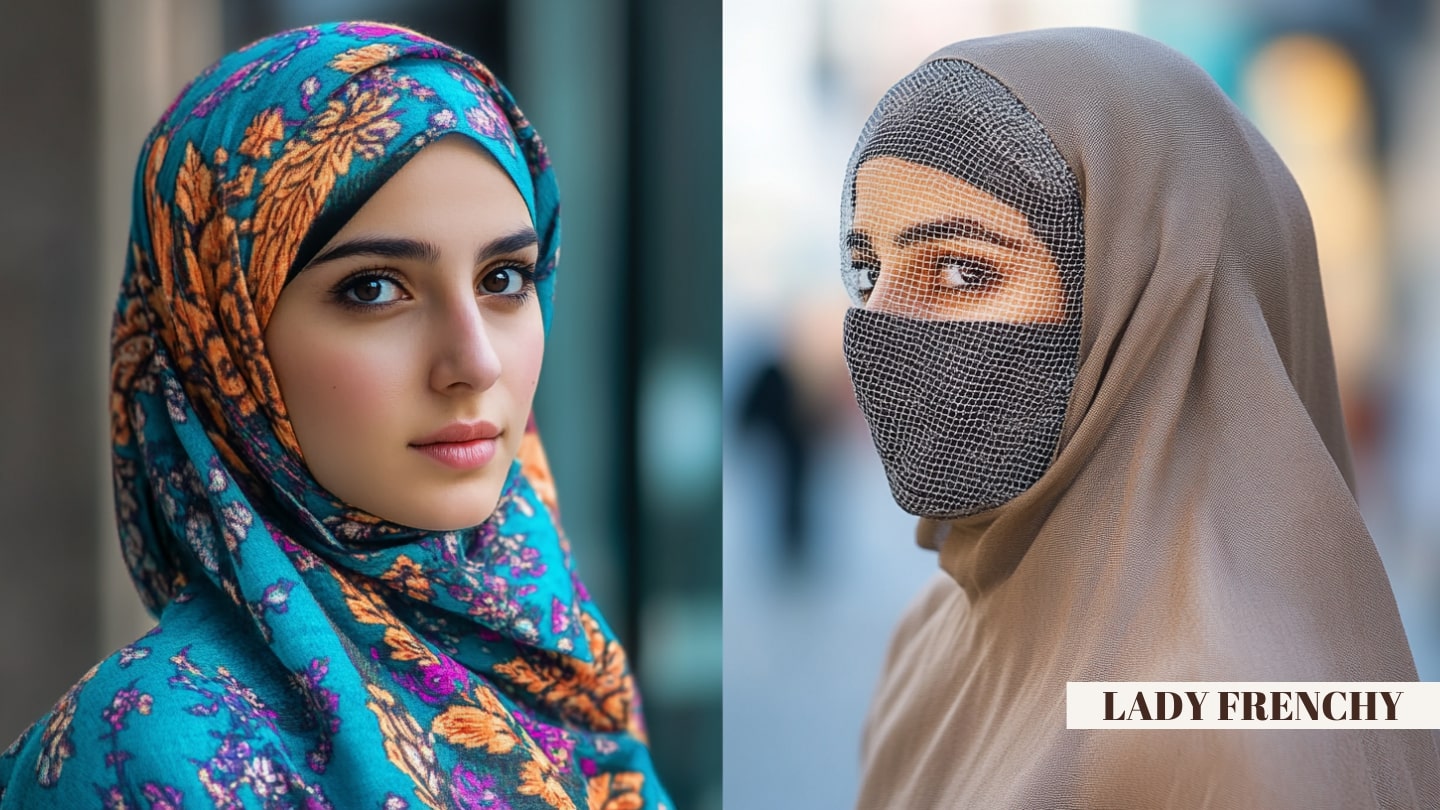
Introduction: How to Wear an Arab Scarf on Your Head
The Arab scarf, known as keffiyeh or shemagh, is an emblematic accessory rich in history and cultural significance, worn for centuries in the Middle East and North Africa.
Knowing how to wear an Arab scarf on your head allows you to master a traditional art while adopting an accessory that has become a must-have in contemporary fashion.
In this comprehensive guide, discover the history of the keffiyeh, its different variations, traditional and modern tying techniques, and tips for wearing it with style and respect.
For other head scarf techniques, see how to make a turban with a scarf and how to cover your hair with a scarf. 🏜️✨
🏜️ Cultural Guide

Women's Scarves
-30% off with code BLOG30
Various styles for everyone 🏜️
€29.99 €20.99
View Collection →
The Keffiyeh: A Cultural Symbol
Discover the different types of Arab scarves and their meanings:
🏜️ The Keffiyeh: More Than Just a Scarf
The keffiyeh (كوفية) is much more than a clothing accessory. Worn for millennia by the peoples of the Middle East and North Africa, it embodies both protection against desert elements, cultural identity, and, more recently, a political symbol of solidarity. Today adopted in global fashion, it retains its rich symbolism while adapting to contemporary styles.
⬛
KEFFIYEH
Black and white, Palestine
🟥
SHEMAGH
Red and white, Jordan
⬜
GHUTRA
Solid white, Gulf
⬛ BLACK
🟥 RED
⬜ WHITE
🟩 GREEN
1. History and Significance of the Keffiyeh
Understand the history of the keffiyeh to better appreciate this accessory:
🏛️ Ancient Origins
The keffiyeh traces its origins back to ancient Mesopotamia, more than 5,000 years ago. Farmers and shepherds wore it to protect themselves from the sun and sand. The characteristic "net" weave allowed for ventilation while filtering out dust.
🐪 Bedouin Tradition The
Bedouins of the desert perfected the art of wearing the keffiyeh. Essential for survival in the desert, it protects against the scorching sun, sandstorms, and nighttime cold. Tying techniques have been passed down from generation to generation.
✊ Political Symbol In the 20th century, the keffiyeh became a
symbol of Palestinian resistance and identity, notably through the figure of Yasser Arafat. The black and white patterns are particularly associated with this symbolism.
🌍 Global Adoption Since the 2000s, the keffiyeh has become a
global fashion accessory, worn for its distinctive aesthetic and symbolic commitment. It is adopted by designers and international brands.
Meaning of Colors
⬛ Black and White (Keffiyeh)
Origin: Palestine, Levant
Meaning: Associated with Palestinian identity and solidarity
Usage: Most widespread internationally
🟥 Red and White (Shemagh)
Origin: Jordan, desert
Meaning: Bedouin tradition, Jordanian royalty
Usage: Popular in the army, outdoor
⬜ Solid White (Ghutra)
Origin: Persian Gulf, Saudi Arabia
Meaning: Purity, Gulf tradition
Usage: Worn with the agal (black cord)
2. Types of Arab Scarves
The different types of keffiyeh and their characteristics:
📐 Dimensions
Standard size: 120 x 120 cm (square)
Large size: 140 x 140 cm
Small size: 100 x 100 cm (fashion)
Shape: Always square
🧵 Materials
Traditional: 100% Cotton (most authentic)
Winter: Thick cotton or wool blend
Lightweight: Fine cotton, viscose
To avoid: Synthetic (not breathable)
🔲 Characteristic Patterns
Hatta: Net/grid pattern (most recognizable)
Border: Traditional fringes on the edges
Weave: Jacquard or printed depending on quality
💡 How to Recognize a Real Keffiyeh An authentic keffiyeh is made of
100% cotton, with woven (not sewn) fringes, a regular net pattern, and a slightly rough texture. Low-quality copies are often synthetic and printed rather than woven.
3. Why Wear an Arab Scarf
The reasons to wear a keffiyeh:
☀️ Sun Protection The keffiyeh offers
excellent UV protection. The cotton weave filters rays while allowing ventilation. Ideal for hiking, travel in hot countries, festivals.
🌬️ Wind and Sand Protection The "net" weave
filters dust and sand while allowing you to breathe. Perfect for desert or windy environments.
❄️ Cold Protection Wrapped around the neck and head, the keffiyeh provides effective
thermal insulation against the desert's night cold or cool days.
🕌 Cultural Expression Wearing a keffiyeh can express a
cultural connection, support for causes, or simply an appreciation for traditional craftsmanship.
👔 Fashion Accessory The keffiyeh has become a
recognized fashion accessory, worn by designers and celebrities. Its distinctive pattern adds a touch of originality to any outfit.
🎒 Versatility Beyond the head, the keffiyeh can serve as a
scarf, shawl, picnic blanket, equipment protection. A multi-functional accessory for travelers.
👜 Full Collection

Square Scarves
30% off with code BLOG30
Large sizes available 👜
€29.99 €20.99
View Collection →
4. Classic Technique: Traditional Style
The traditional method for wearing a keffiyeh:
Step 1: Fold into a Triangle Lay the square keffiyeh flat. Fold it
diagonally to form a triangle. The point will be at the back of the head.
Step 2: Position on the Head Place the triangle on your head with the
straight edge at the forehead. The point of the triangle hangs down the back. The two ends fall on either side of the face.
Step 3: Adjust the Forehead The edge of the scarf should be
just above the eyebrows or in the middle of the forehead, depending on your preference. Make sure it is centered.
Step 4: Cross Under the Chin Take the two ends and
cross them under the chin. The right side goes under the left (or vice versa, depending on your preference).
Step 5: Tie at the Back Bring the ends to the
back of the head and tie them together. The knot can be hidden under the point of the triangle.
Step 6: Adjust Adjust the sides so they
fall harmoniously over the shoulders. Make sure the keffiyeh covers the nape of the neck well.
💡 The Agal (Cord) Traditionally, the keffiyeh is held in place by an
agal (عقال), a double black cord wrapped around the head. The agal keeps the scarf in place and adds a touch of traditional elegance.
5. Bedouin Style: Maximum Protection
The Bedouin style for optimal protection in the desert:
Step 1: Triangle on the Head Like the classic style, place the triangle on your head, point to the back.
Step 2: Wrap one Side Take the right end and
wrap it around your chin and jaw, covering the lower face up to the nose.
Step 3: Secure at the Top Bring this end towards the
top of the head and tuck it under the scarf at the forehead.
Step 4: Leave the Other End The other end remains
free on the shoulder or can also be wrapped for full coverage.
💡 Sandstorm Protection In a sandstorm, both ends can cover
the entire face, leaving only the eyes exposed. The weave filters sand while allowing breathing.
6. Turban Style
The turban style for a more structured look:
Step 1: Fold into a Band Instead of folding into a triangle, fold the keffiyeh several times to obtain a
wide band of about 10-15 cm.
Step 2: Place on the Forehead Place the middle of the band on the
forehead, at eyebrow level.
Step 3: Cross at the Back Bring the two ends to the
back of the head and cross them.
Step 4: Wrap Continue to wrap the ends around the head in
successive layers, gradually covering all of the hair.
Step 5: Secure Tuck the ends
under the layers or secure with a discreet pin.
For more turban techniques, see full turban tutorial.
7. Protective Style (Military/Outdoor)
The tactical/outdoor style adopted by military personnel and adventurers:
Neck and Face Style Place the keffiyeh
around the neck like a scarf. If needed, pull one end up to cover the nose and mouth. Practical and quick to adjust.
Balaclava Style Wrap the keffiyeh around the head and face, leaving only the
eyes and forehead uncovered. Maximum protection against the elements.
Nape Style Tie the keffiyeh to cover
the nape of the neck and ears, ideal sun protection for hikes.
💡 Military Use The shemagh (red/white) is standard in many armies (British, American) for operations in desert areas. It serves as sun protection, dust filter, and even an emergency bandage.
8. Contemporary Fashion Style
Modern and trendy adaptations of the keffiyeh:
🧣 Casual Scarf Wear the keffiyeh
around your neck like a scarf, untied or with a loose knot. Bohemian and casual look. See
tie scarf around the neck.
👱♀️ Hair Headband Fold into a band and wear as a
headband in your hair. Perfect bohemian-chic effect for summer. See
headband with scarf.
👜 Bag Accessory Attach the keffiyeh to the
handle of your bag for a touch of originality. See
attach scarf to bag.
🎗️ Belt Use the folded keffiyeh as an
original belt on jeans or a dress. See
scarf as a belt.
⚠️ Cultural Respect When wearing a keffiyeh for fashion, be aware of its
cultural and political significance. Wear it with respect and knowledge of its history. Avoid wearing it in contexts where it could be perceived as disrespectful.
9. Tips and Care
Practical tips for wearing and caring for your keffiyeh:
🧵 Choose Good Quality Opt for a keffiyeh made of
100% cotton with woven fringes. Authentic versions are more durable and breathable than synthetic copies.
📐 Choose the Right Size For traditional headwear, choose at least
100x100 cm. For more versatility, opt for 120x120 cm.
🎨 Coordinate Colors The black/white keffiyeh is the most versatile. Red/white adds color. Choose according to your
wardrobe and style. See
meaning of colors.
📌 Fastening If the keffiyeh slips, use
discreet pins or a traditional agal. You can also tie a tighter knot.
Care
🧼 Washing Wash by hand or in a machine on a
delicate cycle, cold water. Cotton tolerates washing well but can shrink in hot water.
🌬️ Drying Dry
flat in the open air. Avoid tumble drying which can damage the fringes and cause shrinkage.
♨️ Ironing Iron at
medium temperature if necessary. The keffiyeh can also be worn slightly wrinkled for an authentic look.
🌸 Perfect Accessory

Assorted Scarves
30% off with code BLOG30
All styles 🌸
€29.99 €20.99
View Collection →
Conclusion
Knowing how to wear an Arab scarf on your head allows you to master an accessory rich in history. Summary:
- 🏜️ Classic: Triangle, crossed under the chin, tied behind
- 🐪 Bedouin: Maximum face and head protection
- 👳 Turban: Wrapped around the head
- 🎒 Tactical: Neck with face option
- 👔 Fashion: Scarf, headband, accessory
A millennium-old accessory for a timeless style! 🏜️✨
Explore our scarf collection to find your style! 🏜️✨
For other styles, discover turban with scarf, covering hair, and which fabric for a scarf.
✍️ Rédigé par
Diane Valmont
Passionnée de mode et d'accessoires depuis plus de 10 ans, Diane explore les tendances et partage ses conseils style sur le Blog Foulard. Du foulard en soie au carré satin, elle vous guide pour sublimer chaque tenue avec élégance.