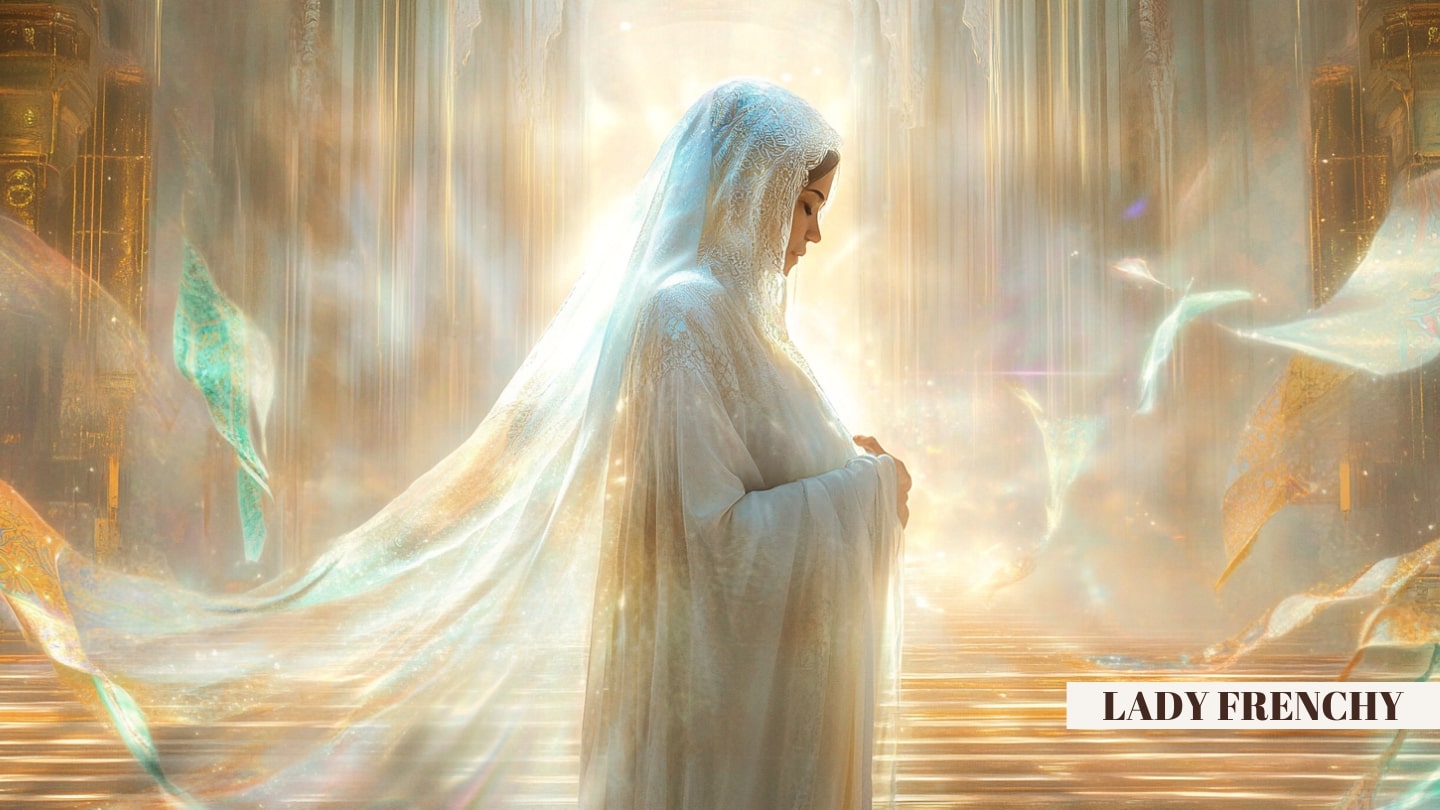
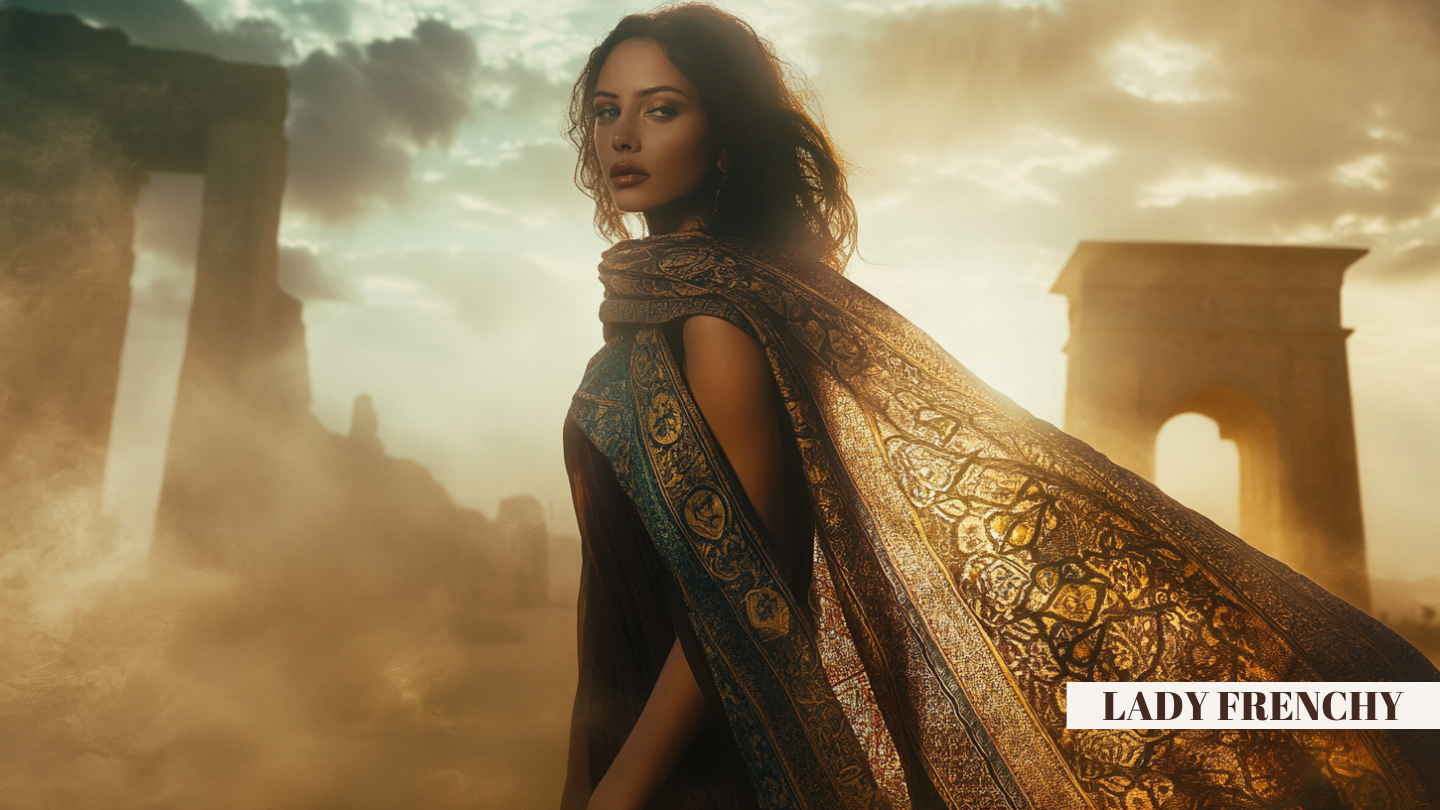
Introduction: The Scarf, a Universal Symbol with a Thousand Meanings
The scarf is much more than a simple fashion accessory. Throughout history and civilizations, this textile object has played a powerful symbolic role that transcends geographical and cultural boundaries.
From spirituality to social belonging, from religious modesty to political expression, the symbolism of the scarf varies considerably depending on the era, location, and beliefs. It is a fascinating object that carries millennia of human history within it.
In this comprehensive article, we will explore the many hidden meanings behind this accessory so rich in symbolism. To discover the meaning of each color, consult our complete guide to the meaning of scarf colors. Whether it is a sign of modesty, spiritual protection, social status, or cultural identity, the scarf is imbued with meanings that go far beyond its aesthetic appearance.
Whether you wear an elegant satin scarf for an evening, a bohemian hair scarf, or a classic square scarf, you carry with you a millennial symbolic heritage. Let's discover together what your scarf truly says about you!

30% off with code BLOG30
+ FREE 3rd scarf with purchase of 2 🎁
📖 Article Summary
- 1. Historical and Symbolic Origins of the Scarf
- 2. Cultural and Social Symbolism of the Scarf
- 3. Spiritual Significance of the Scarf in Religions
- 4. The Scarf as a Political and Identity Symbol
- 5. Symbolism of Scarf Colors
- 6. The Scarf and Fashion: A Reimagined Symbol
- 7. Conclusion: An Accessory Rich in Meaning
1. Historical and Symbolic Origins of the Scarf

The scarf has ancient historical roots and has played a key role in many civilizations throughout the ages. To understand its current symbolism, it is essential to trace the origins of this millennial accessory.
🏺 Ancient Egypt: Divine Connection
In ancient Egypt (3000 BCE), the scarf was worn by priests and pharaohs, representing their divine connection and sacred status. The famous nemes - that iconic striped headdress of the pharaohs - was much more than a simple ornament: it symbolized cosmic power and the protection of the gods.
Egyptian scarves were often decorated with hieroglyphs and symbols representing spiritual power, divine protection, and connection with the afterlife. Even today, when you wear a gold scarf, you inherit this Egyptian solar symbolism!
🏛️ Ancient Greece and Rome: Status and Modesty
In ancient Greece and Rome, women wore veils or scarves to show their marital status and modesty. A married woman without a veil was considered dishonorable to her husband. To learn more about how to dress for a wedding today, consult our complete guide.
Roman men also used scarves called "focale" to protect themselves from bad weather during travels or battles. Legionnaires wore red or white scarves that identified them on the battlefield.
🇨🇳 Imperial China: Rank and Respect
In China, the scarf has been used for centuries as a symbol of social rank and respect for ancestors. During the Zhou dynasty (1046-256 BCE), the color and material of the scarf precisely indicated the military rank or social status of the wearer.
Silk - a Chinese invention kept secret for 3000 years - was reserved for the elite. A satin or silk scarf remains today a symbol of luxury and refinement, a direct legacy of this tradition.
🌍 Universal Rituals and Ceremonies
Across all civilizations, the scarf has been intimately linked to religious rituals and important ceremonies. It served to mark key stages of life: birth, coming of age, marriage, mourning.
This ritual function continues today. To learn more about the fascinating history of the scarf, consult our dedicated article!
2. Cultural and Social Symbolism of the Scarf
The scarf holds unique social and cultural importance throughout the world. In some societies, it carries deep meaning and serves to express fundamental values such as modesty, identity, and social belonging.
🙏 Modesty and Tradition

In many cultures around the world, the scarf is a symbol of modesty and respect for religious and social customs. This function transcends religions and continents.
In Muslim-majority countries, the hijab (veil) is worn by women to cover their heads, reflecting their religious devotion and respect for modesty norms. But this practice is not exclusive to Islam: it is found in Orthodox Judaism, certain branches of Christianity, and many ancient traditions.
The modesty expressed by the scarf is not synonymous with submission, but rather a personal choice and an assertion of identity. It is a way of controlling what one shows to the world.
👑 Social Status and Wealth

In many societies, the quality, color, and style of the scarf indicate the social class or economic status of the wearer.
In India: Dupattas made of silk embroidered with gold or adorned with precious stones are reserved for special occasions and wealthy families. The fineness of the weave and the complexity of the patterns reveal the person's status.
In West Africa: The gele (headwrap) is a true social indicator. The more voluminous, elaborate, and made of precious fabric it is, the more it signals a high status or an important occasion.
In the West: Scarves from major fashion houses like Hermès, Chanel, or Dior have become markers of luxury and good taste. A square scarf in silk remains a symbol of bourgeois elegance. To enhance your outfits with the right accessories, discover our guide what accessories with a dress.
🏴 Cultural Identity

Scarves are often used to assert a strong cultural identity and connect with ancestral roots.
Scotland: The tartan patterns found on Scottish scarves and shawls are symbols of clans and family lineages. Each family has its own pattern, passed down from generation to generation.
Arab world: The keffiyeh (or shemagh) has become a powerful symbol of Arab and Palestinian identity, recognizable worldwide by its distinctive checkered pattern.
Latin America: The colorful scarves of flamenco or salsa dancers are expressions of Latin American passion and joie de vivre.
Today, choosing a bold leopard scarf or a flowery bohemian scarf is also expressing a part of one's identity and values!

30% off with code BLOG30
The color of wisdom 🔮
3. Spiritual Meaning of the Scarf in Religions
Beyond its cultural and social connotations, the scarf plays a major spiritual role in many religious traditions around the world. It is a sacred object that connects humans to the divine.
☪️ Islam: Modesty and Piety

In Islam, the headscarf is a profound symbol of modesty and piety. The hijab (literally meaning "to hide" or "to cover" in Arabic) is worn by many Muslim women to adhere to principles of respect, dignity, and protection.
There are different forms of Islamic veils, each with its own meaning:
- Hijab: Covers the hair and neck, the most common
- Khimar: Longer veil covering down to the waist
- Niqab: Also covers the face except for the eyes
- Chador: Large veil covering the entire body (Iran)
For many Muslim women, the hijab is a personal act of faith, a connection with God, and not an imposed obligation. It is a spiritual choice that expresses their religious identity. Also discover the difference between veil and Islamic headscarf.
✝️ Christianity: Humility before God

In some branches of Christianity, particularly Orthodox churches, traditional Catholic churches, and certain Protestant communities (Amish, Mennonites), women cover their heads with a scarf or veil during religious ceremonies.
This practice has its origins in the epistles of Saint Paul (1 Corinthians 11:5-6), which recommended that women cover their heads when praying. The veil symbolizes humility before God and respect for divine order.
Even today, many women wear a veil or a white scarf (symbol of purity) or black scarf (symbol of sobriety) when entering a church.
🕉️ Hinduism and Buddhism: Respect and Renunciation

In Hinduism and Buddhism, the scarf plays an important role in ceremonies and spiritual practices.
Hinduism: The dupatta (long scarf) is worn by women to cover their heads in temples as a sign of respect for deities. Colors have a particular meaning: red for brides, white for mourning, saffron yellow for spirituality.
Buddhism: Sadhus (Hindu ascetics) and Buddhist monks often wear orange or saffron-colored scarves to symbolize their renunciation of material life and their spiritual quest.
To delve deeper into this fascinating subject, discover our article on the spiritual meaning of the scarf and its hidden symbols.
4. The Scarf as a Political and Identity Symbol

The scarf has also played a key role in major political movements and social debates. It has often become a powerful symbol of identity, resistance, or emancipation.
🇫🇷 The French Revolution: Liberty and Equality
During the French Revolution (1789-1799), the red Phrygian cap and tricolor scarves became symbols of liberty and the emancipation of the people. Wearing these colors meant showing support for revolutionary ideals.
✊ Workers' and Social Movements
In the 19th and 20th centuries, the red scarf became the emblem of international workers' movements. It symbolized the solidarity of workers and their struggle for better conditions. This symbolism persists today in social protests. Discover the full meaning of the red scarf.
🌍 Resistance and National Identity
In many countries, the scarf has served as a symbol of resistance against oppression:
- Palestine: The black and white keffiyeh has become a global symbol of the Palestinian cause
- Iran: The veil has successively been a symbol of resistance to imperialism (1979) and then of protest against power (2022)
- France: The scarf is at the heart of debates on secularism and religious freedom
💜 Feminism and Emancipation
Paradoxically, the scarf can be both a symbol of tradition and emancipation. Many women claim the right to choose whether or not to wear a scarf, making this accessory a symbol of individual freedom and self-determination.
The scarf thus becomes a tool for collective and individual expression, representing ideals as varied as freedom, identity, and resistance.
5. Symbolism of Scarf Colors
The color of your scarf is never insignificant! Each shade carries a deep symbolic meaning that can influence how you are perceived and even your own state of mind. Consult our complete guide to the meaning of scarf colors to learn everything.
❤️ Red: Passion and Power
The red scarf symbolizes passion, love, power, and energy. It is the color of revolutions and bold statements. Discover the full meaning of the red scarf.
⚪ White: Purity and Peace
The white scarf represents purity, innocence, peace, and new beginnings. It is the color of Western weddings and spiritual ceremonies. See the meaning of the white scarf.
⚫ Black: Elegance and Mystery
The black scarf embodies elegance, mystery, sophistication, and sometimes mourning. It is a timeless classic that goes with everything. Discover the meaning of the black scarf.
💙 Blue: Serenity and Trust
The blue scarf evokes serenity, trust, loyalty, and wisdom. It is the most universally appreciated color.
💚 Green: Nature and Balance
The green scarf symbolizes nature, balance, growth, and harmony. It is also the sacred color of Islam. Discover the meaning of the green scarf.
💜 Purple: Spirituality and Royalty
The purple scarf represents spirituality, royalty, creativity, and wisdom. It was historically the rarest and most precious color.
💛 Yellow: Joy and Optimism
The yellow scarf embodies joy, optimism, solar energy, and intellect. In Asia, it is a sacred color associated with royalty. See the meaning of the yellow scarf.
🧡 Orange: Creativity and Enthusiasm
The orange scarf symbolizes creativity, enthusiasm, warmth, and spirituality (color of Buddhist monks). Discover the meaning of the orange scarf.
💗 Pink: Femininity and Softness
The pink scarf represents femininity, softness, tender love, and compassion.
To choose the perfect color according to your complexion and personality, consult our guide which scarf color to choose!

-30% discount with code BLOG30
Transform your hairstyle in 30 seconds ✨
6. The Scarf and Fashion: A Reinvented Symbol

Today, the scarf has been brilliantly reinvented as an essential fashion accessory, while retaining its profound symbolism through choices of colors, styles, and materials.
👗 A Legacy of High Fashion
Major fashion houses have elevated the scarf to the rank of a textile work of art:
- Hermès: Since 1937, the "Hermès square" has become the most iconic luxury accessory. Each scarf tells a story and requires 18 months to create.
- Chanel: Coco Chanel popularized the scarf as an accessory for female emancipation in the 1920s.
- Dior: "Mitzah" scarves pay homage to classic Parisian elegance.
- Gucci: Maximalist scarves with floral patterns represent Italian exuberance.
🌟 Modern Versatility
The contemporary scarf can be worn in a thousand ways, each carrying its own symbolism. Discover our complete scarf tutorial guide to learn all the techniques:
- Around the neck: Classic elegance and sophistication - discover 15+ ways to tie
- In the hair: Bohemian freedom and femininity - scarf hairstyles guide
- On a bag: Personalized touch and refinement - twilly scarves
- As a belt: Creativity and originality - scarf belts
- Flight attendant style: Professionalism and elegance - complete tutorial
🌙 Hair Protection and Care
The satin or silk scarf has also become an indispensable beauty ally for protecting your hair at night. This traditional function has returned to fashion thanks to beauty influencers. Discover our guide how to care for your hair at night for all the benefits.
♻️ A Symbol of Sustainable Fashion
In a context of ecological awareness, the scarf has become a symbol of sustainable fashion:
- Timeless: A quality scarf lasts for decades
- Versatile: One scarf = dozens of different looks
- Transmissible: Scarves are passed down from generation to generation
A quality large scarf is an intelligent fashion investment that combats fast fashion while allowing you to express your unique style. Also consult our guide silk scarf care to make it last.
7. Conclusion: An Accessory Full of Meaning
The symbolism of the scarf is vast, complex, and fascinating, transcending geographical, cultural, and temporal boundaries. From ancient Egypt to Parisian haute couture, this millennial accessory has constantly reinvented itself while retaining its symbolic power.
Whether used as a symbol of modesty, spirituality, cultural belonging, political identity, or simply personal elegance, the scarf embodies deep values that vary according to cultures, beliefs, and individuals.
As a fashion accessory, the scarf remains a timeless symbol, capable of reinventing traditions while conveying a personal or collective message. Its ability to represent spirituality, belonging, and individuality simultaneously makes it a unique object, always relevant in our contemporary world.
The next time you tie a scarf around your neck or in your hair, remember: you are carrying millennia of history, symbolism, and meaning. It's much more than an accessory - it's a statement.
To further explore the mysteries behind this elegant accessory, discover:
- The meaning of scarf colors - complete guide
- The spiritual meaning of the scarf and its hidden symbols
- The fascinating history of the scarf through the ages
- How to wear a scarf with style every day
✨ Discover Your Symbolic Scarf ✨
Each color carries a unique meaning. Find the scarf that expresses your personality and your values!
Explore All Collections →