469 products
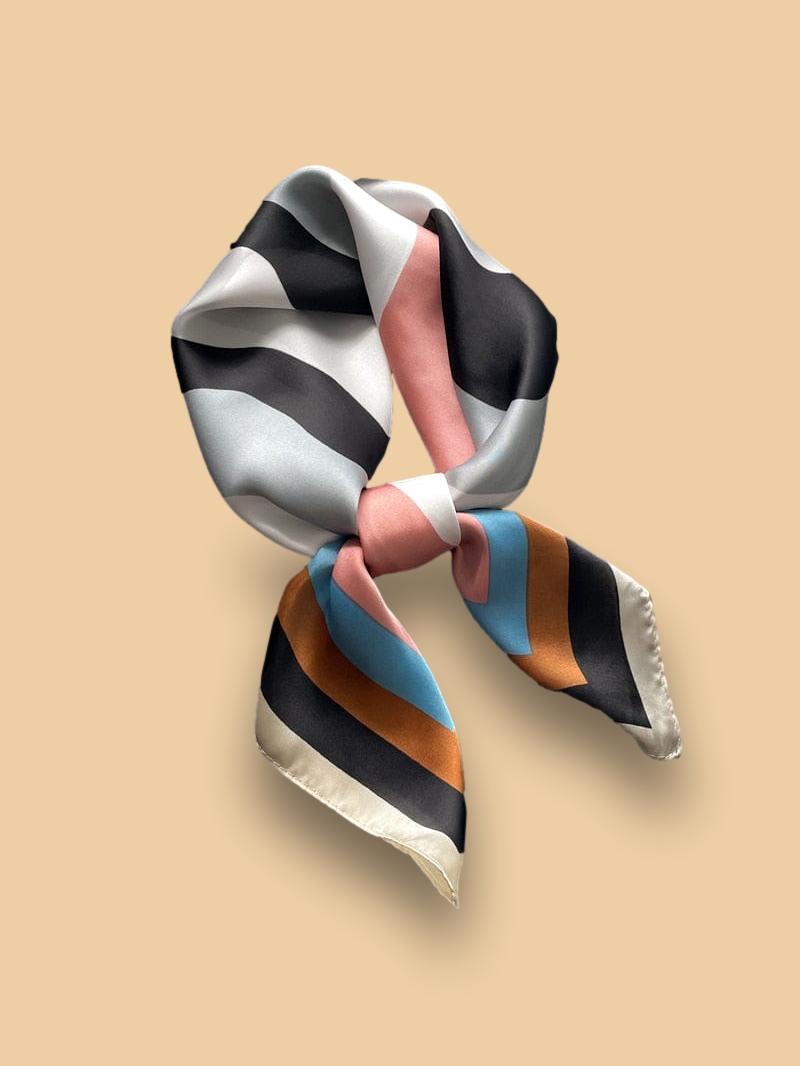
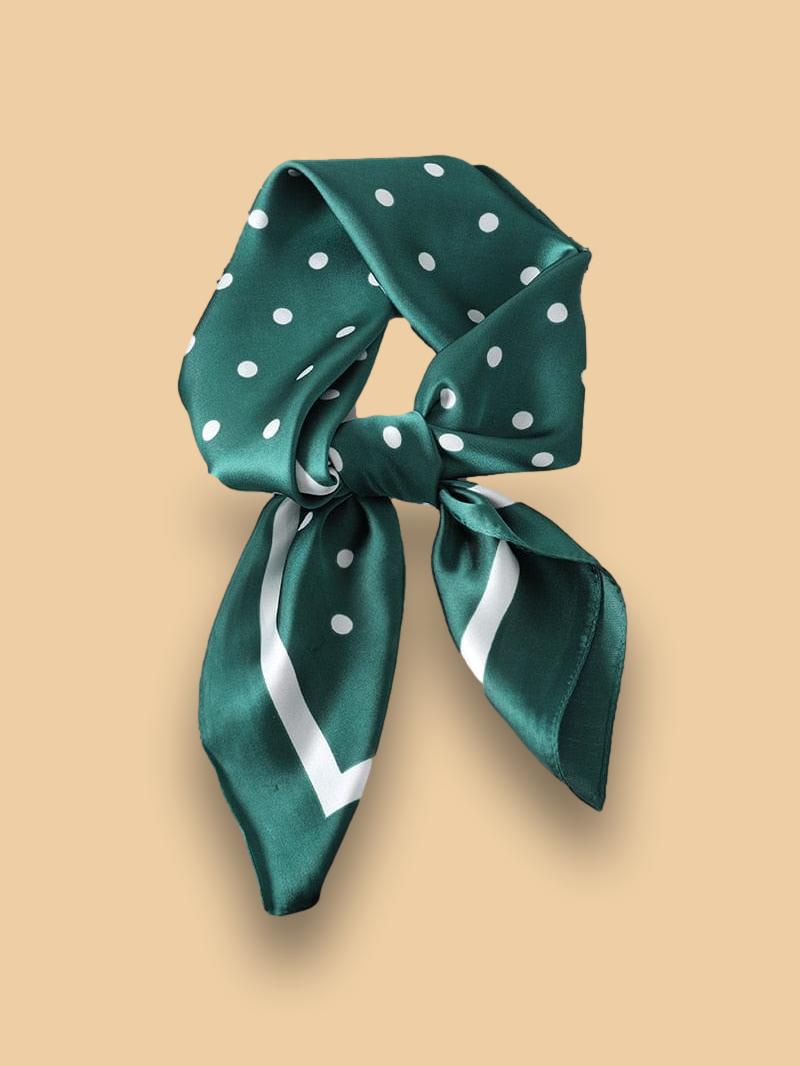
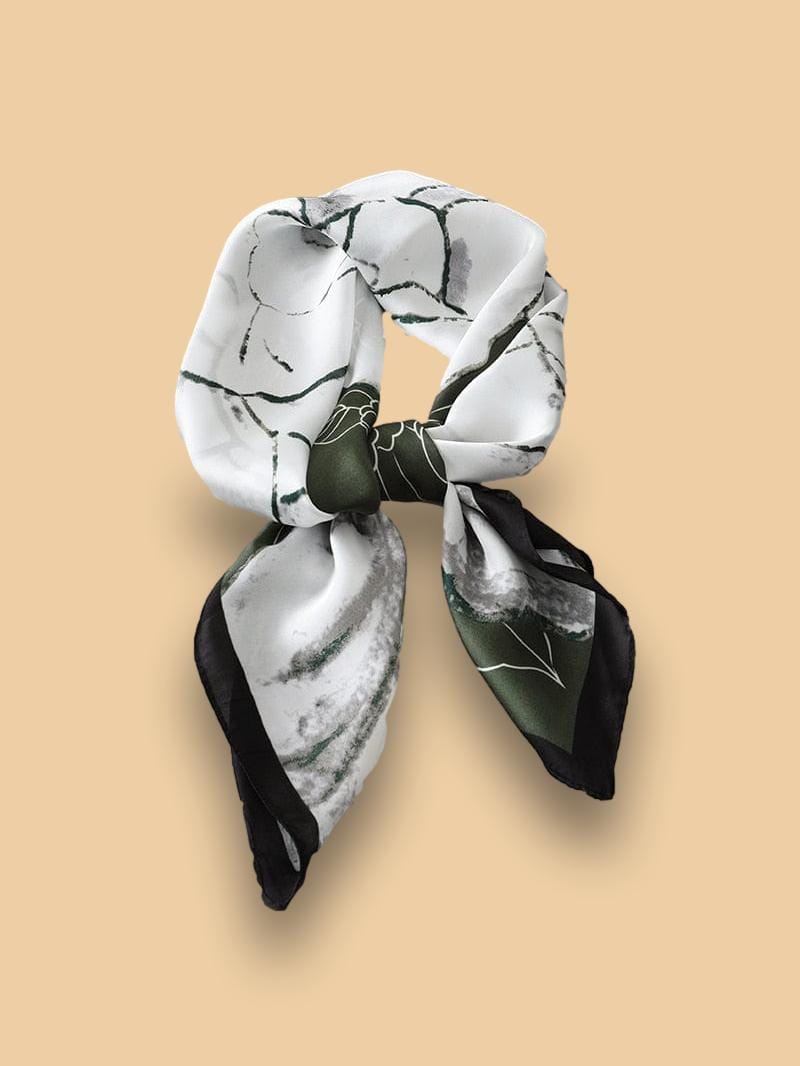
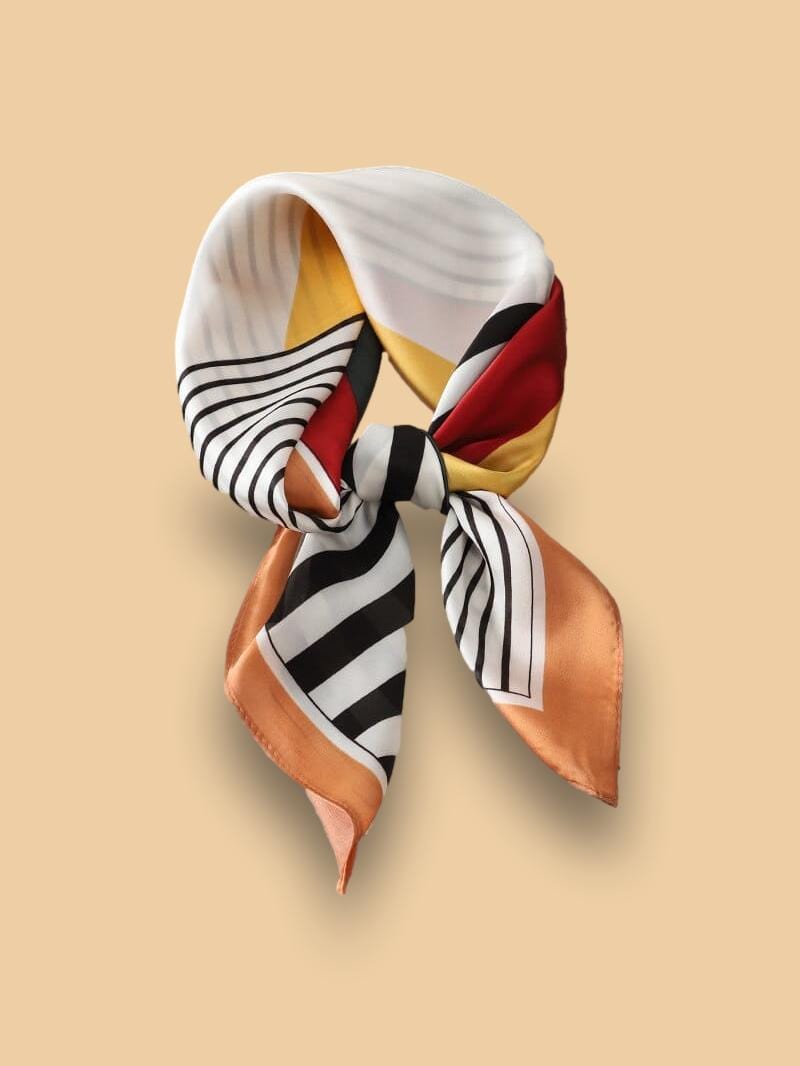
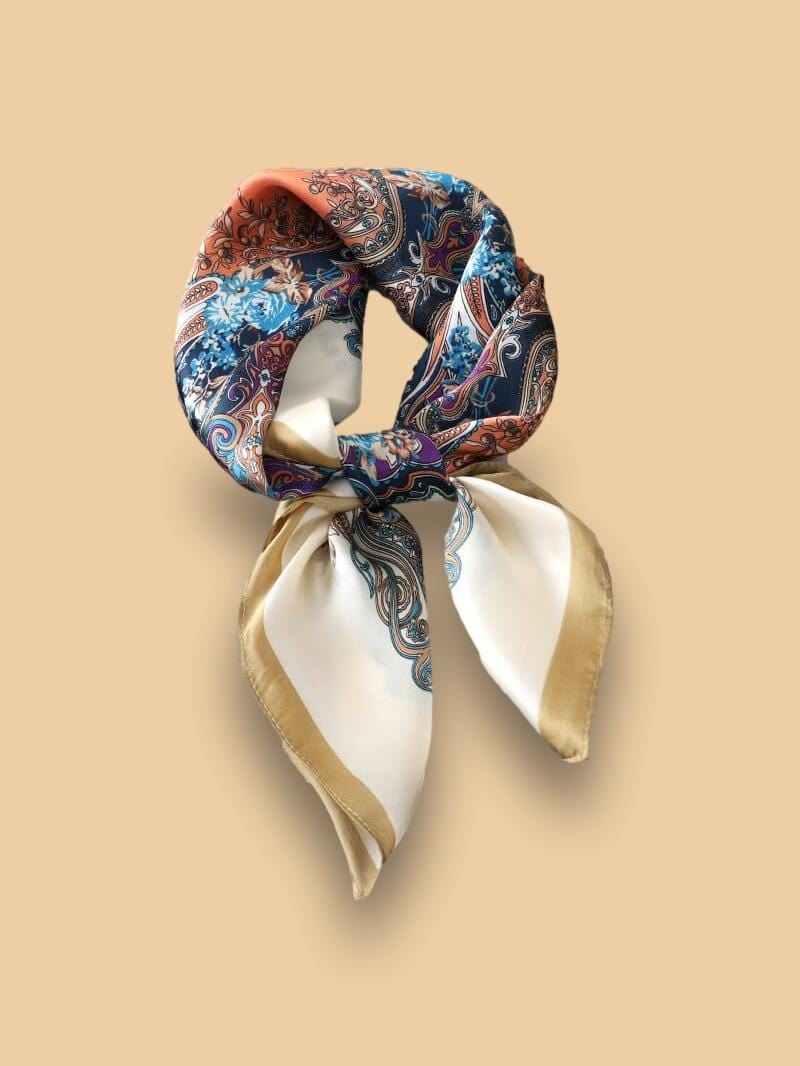
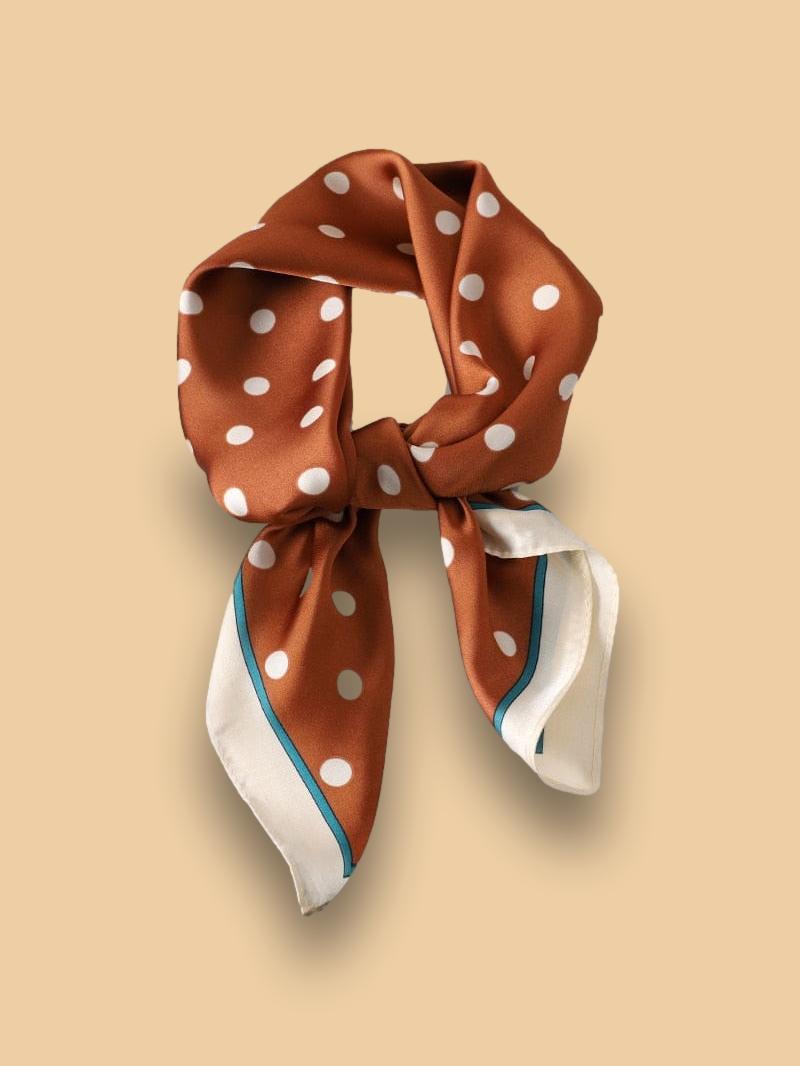
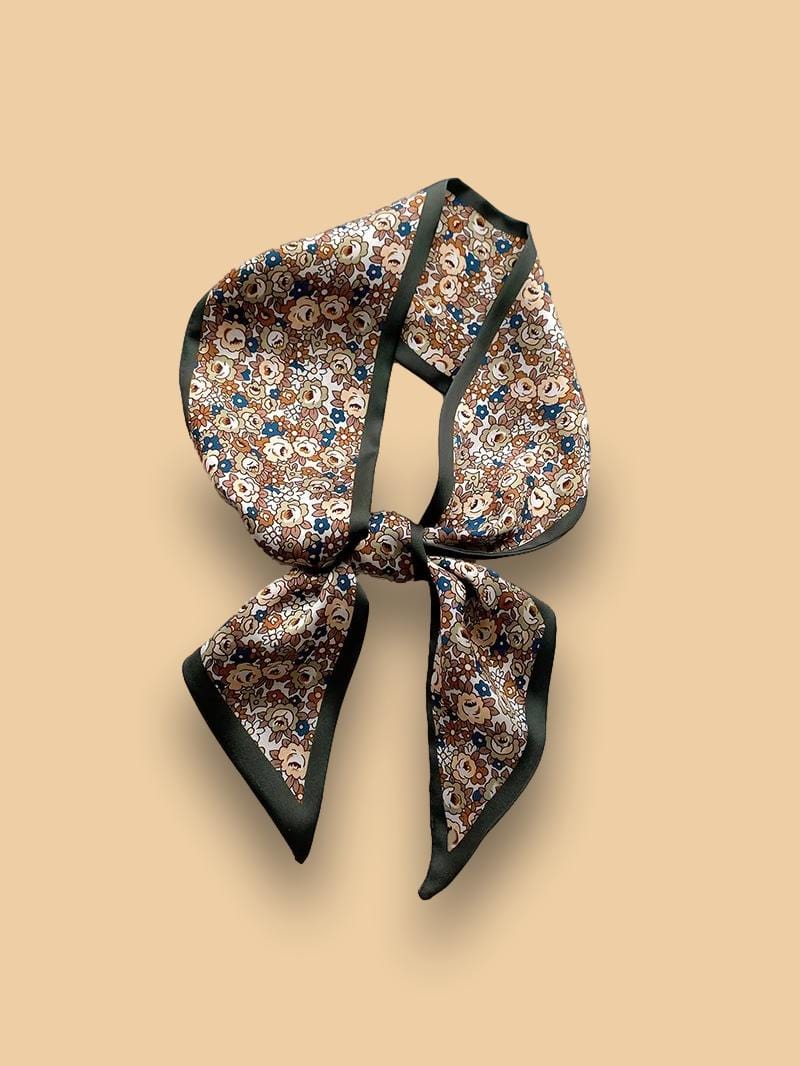

Scarf: The Complete Expert Guide to the Iconic Fashion Accessory
Welcome to the complete guide to the scarf, that legendary fashion accessory that transcends centuries without ever going out of style. Whether you are an absolute beginner looking to understand the basics, a passionate collector wanting to deepen your knowledge, or simply curious to discover the fascinating world of scarves - this encyclopedic guide will answer all your questions. From the history of scarves through the ages to the most advanced tying techniques, from manufacturing secrets to buying tips - immerse yourself in the captivating world of scarves and become a true expert of this essential accessory.
What is a Scarf? Definition and History
A scarf is a piece of fabric, usually square or rectangular, worn as a fashion accessory around the neck, in the hair, on a bag, or transformed into clothing. But this simplistic definition does not do justice to the cultural and historical richness of this fascinating object.
The Etymology of the Word "Foulard" (Scarf)
The word "foulard" comes from the Old French "foulé" which means "pressed" or "milled", in reference to the fabric manufacturing process. The term first appeared in the 17th century to describe these precious silk squares imported from the East.
The Fascinating History of the Scarf Through the Centuries
Antiquity (3000 BC - 476 AD)
The first traces of scarves date back to ancient Egypt where Queen Nefertiti already wore fine linen veils around her head. In ancient China, soldiers of the terracotta army wore scarves around their necks to differentiate themselves by regiment - this is the first documented use of the scarf as a distinctive sign.
Middle Ages (476 - 1492)
The scarf becomes a symbol of social status. European nobles wore "gorgets" - ancestors of the scarf - made of precious silk imported from the Silk Road. Peasants wore linen or wool scarves to protect themselves from cold and dust.
Renaissance (15th - 17th century)
The golden age of Lyonnaise silk. The scarf becomes a refined fashion accessory in all European courts. Queen Elizabeth I of England owned over 3000 scarves in her royal wardrobe.
18th Century - The French Revolution
The red scarf becomes a revolutionary political symbol. The "merveilleuses" of the Directory period launched the fashion for cashmere scarves imported from India - prices reached new heights for this precious material.
19th Century - Industrialization
In 1837, the Hermès house was founded in Paris. Gradual democratization of the scarf thanks to textile industrialization. The scarf became accessible to the bourgeoisie and then to the popular classes.
1937 - The Square Revolution
Hermès launched the first 90x90 cm silk square, "Jeu des Omnibus et Dames Blanches". This was the beginning of a legend. The 90x90 format became the global standard that endures today.
1950s - The Golden Age of Hollywood
Grace Kelly, Audrey Hepburn, Marilyn Monroe, Elizabeth Taylor - all Hollywood stars wore scarves. Grace Kelly even transformed her scarf into an arm sling after an accident - the image went around the world and further popularized this accessory.
1960s-70s - Symbol of Freedom
Brigitte Bardot popularized the headscarf. The scarf became a symbol of female liberation and emancipation. Hippies made it an emblem of their movement.
1980s-90s - Accessible Luxury
Major fashion houses democratized the scarf. It became the "entry-level" luxury accessory - a way to access the elegance of big brands at a relative price.
2000s-2010s - Evolution of Trends
The scarf took a back seat to other accessories (chunky scarves, infinity scarves).
2020s+ - The Big Comeback
Social media massively relaunched the scarf trend. Content creators show dozens of creative ways to wear it. The scarf has become an essential fashion accessory again.
Anatomy of a Scarf: Understanding Its Construction
To truly understand the scarf, one must decipher its technical construction:
The Parts of a Scarf
- The body (or field): The main surface of the scarf, which bears the patterns and colors
- The edges: The 4 sides of the square (or 2 lengths + 2 widths for rectangular)
- The hems: The finishing of the edges - hand-rolled (luxury) or machine-stitched (accessible)
- The corners: The 4 junction points - crucial for certain ties
Edge Finishing Techniques
1. Hand-Rolled Hem
The pinnacle of refinement. Each edge is hand-rolled and sewn with invisible stitches. Precious artisanal work. Our scarves use this careful technique.
2. Standard Machine Hem
Hem folded and machine-stitched. Less expensive, just as durable, but less visually refined. Used by most mainstream brands.
3. Raw Edges (Unhemmed)
Some bohemian scarves have intentionally frayed edges for a casual effect. Trendy but less durable.
4. Scalloped Edges
Wave or tooth-shaped edges - vintage retro style.
The Different Scarf Materials: A Complete Guide
The material of a scarf determines its drape, price, care, and use. Here is the comprehensive comparison:
1. Natural Silk (Absolute Luxury)
Origin: Fiber produced by the silkworm (bombyx mori)
Price: 150-800€ for a 90x90 scarf
Advantages: Incomparable shine, extreme lightness, natural thermoregulation, unique silky feel, cultural prestige
Disadvantages: Very fragile, dry cleaning required, high price, yellows over time, tears easily
Care: Dry clean only, store away from light
For whom: Collectors, very special occasions, long-term investment
2. Synthetic Satin (Our Specialty - The Best Compromise)
Origin: Polyester woven in a satin weave
Price: 15-50€ for a 90x90 scarf
Advantages: Luxurious shine close to silk at an accessible price, machine washable, very durable, does not yellow, does not wrinkle, quick drying
Disadvantages: Less prestigious than natural silk, slight synthetic feel on initial touch
Care: Machine wash 30°C, air dry, no special care required
For whom: Daily use, best value for money and practicality on the market
3. Cotton (The Comfortable Natural)
Origin: Natural plant fiber
Price: 20-60€ for a 90x90 scarf
Advantages: Breathable, absorbent, natural, washable, soft, hypoallergenic
Disadvantages: Less shiny than silk/satin, wrinkles a lot, dries slowly, less fluid drape
Care: Machine wash, ironing required
For whom: Sensitive skin, summer/sport use, natural casual style
4. Wool/Cashmere (The Winter Warmth)
Origin: Sheep's wool or cashmere goat hair
Price: 80-400€ for cashmere
Advantages: Very warm, perfect insulator, soft, luxurious
Disadvantages: Heavy, thick, winter only, can be itchy, delicate washing
Care: Hand wash in cold water, dry flat
For whom: Harsh winters, seeking maximum warmth
5. Modal/Viscose (The Plant-Based Alternative)
Origin: Artificial fiber of plant origin (cellulose)
Price: 25-70€
Advantages: Soft, fluid, breathable, eco-responsible if certified
Disadvantages: Wrinkles, less shiny, less durable than synthetic
Care: Delicate wash
For whom: Seeking plant-based alternatives
Our Recommendation
For most women, premium synthetic satin (our satin scarves) represents the best choice:
✅ Luxurious appearance close to silk
✅ Accessible price
✅ Ultra-easy care (machine washable)
✅ Long-term durability
✅ Daily use without constraints
Scarf Formats: Find Your Perfect Size
Each scarf format has its specific optimal uses:
The 90x90 cm Square - The Universal Icon
History: Popularized since 1937 by major Parisian fashion houses, becoming a global standard
Uses: 30+ ways to wear - neck, hair, bag, belt, top
For whom: All women - the first scarf you absolutely must buy
Advantages: Maximum versatility, recognized universal format
Explore our collection of 90x90 cm square scarves or our 90x90 cm scarf.
The Small Square 50-70 cm - The Daily Practical
Uses: Hair (optimal), simple necktie, bag, wrist
For whom: Daily use, small body types, headbands
Advantages: Ultra-compact, lightweight, accessible price
Discover our collection of small women's scarves.
The Large Square 110-140 cm - The Statement
Uses: Shoulder stole, shawl, sarong, generous drapes, top
For whom: Large sizes, evenings, clothing transformations
Advantages: Maximum visual impact, warmth, creative versatility
Find our collection of large scarves.
The Twilly 85x5 cm - The Bag Specialist
Uses: Bag accessory (optimal), bracelet, thin belt, hair
For whom: Bag personalization, accessible fashion style
Advantages: Specialized and perfect for its use, very compact
Explore our collection of handbag scarves and our handbag scarf.
The Long Rectangular 180x70 cm - The Elegant Scarf
Uses: Autumn-winter scarf, stole, shawl
For whom: Seeking warmth and elegance
Advantages: Maximum warmth, generous drapes
Find our collection of long and thin scarves.
Scarf Tying Techniques: Complete Masterclass
Mastering the art of the scarf comes from knowing tying techniques. Here are the 15 fundamental ties:
BEGINNER LEVEL
1. The Simple Necktie
Difficulty: ★☆☆☆☆
Fold into a 5-6 cm band, wrap once, tie on the side. The simplest, guaranteed elegant. Time: 10 seconds.
2. The Basic Hair Bandana
Difficulty: ★☆☆☆☆
Fold into a 4 cm band, place on head, tie under hair. Easy retro feminine style. Time: 15 seconds. Ideal with our hair scarves.
3. The Twilly on a Bag
Difficulty: ★☆☆☆☆
Fold into a thin 2-3 cm band, wrap around handle, tie. Accessible fashion style. Time: 20 seconds. Discover our handbag scarves.
INTERMEDIATE LEVEL
4. The Parisian Knot
Difficulty: ★★☆☆☆
Fold into a triangle, point in front of chest, cross behind neck, tie in front under point. The iconic French classic. Time: 1 minute.
5. The Professional Lavallière
Difficulty: ★★☆☆☆
Fold band, pass under shirt collar, tie a strict bow tie. Chic working girl. Time: 1.5 minutes.
6. The Twisted Necklace
Difficulty: ★★☆☆☆
Fold thin band, twist all along, wrap tightly around neck. Sophisticated textile jewelry effect. Time: 1 minute.
7. The Ribboned Ponytail
Difficulty: ★★☆☆☆
Tie normal ponytail, wrap scarf around elastic, tie. Instant elegance. Time: 1 minute. Perfect with our small scarves.
ADVANCED LEVEL
8. The Full Turban
Difficulty: ★★★☆☆
Fold triangle, place on forehead, wrap both sides, tie behind, tuck in point. Oriental glamour. Time: 3 minutes.
9. The Integrated Bun
Difficulty: ★★★☆☆
Make a bun, wrap scarf around like a ribbon, tie, pin. Wedding sophistication. Time: 4 minutes. Explore our bohemian style hair scarves.
10. The Integrated Braid
Difficulty: ★★★☆☆
Divide hair into 3, scarf = 1 section, braid. Romantic bohemian. Time: 3 minutes (if you know how to braid).
EXPERT LEVEL
11. The Bandeau Top
Difficulty: ★★★★☆
Large 110cm square, place on chest, tie back and neck. Beach/festival bustier. Time: 5 minutes. Safety: pins recommended. Ideal with our large scarves.
12. The Retro Ascot Knot
Difficulty: ★★★★☆
Cross under chin 50s style, bring up, fix with brooch. Timeless retro glamour style. Time: 3 minutes.
13. The Obi Belt
Difficulty: ★★★★☆
Large square folded into a wide band, wrap around waist twice, tie flat knot at back. Modern kimono. Time: 4 minutes. Explore our scarf belts.
14. The Creative Asymmetrical Drape
Difficulty: ★★★★★
Free creation without fixed rules. For avant-garde fashionistas. Time: variable. Requires experimentation.
15. The Sarong Skirt
Difficulty: ★★★★☆
Large 110cm+ square, tie at waist, adjust length. Chic beachwear. Time: 3 minutes. Tip: safety pins for security. Perfect with our large scarves.
How to Choose the Right Scarf? The Buying Guide
Buying a scarf is not to be improvised. Here are the criteria to check:
1. Check Material Quality
- Touch test: Should be soft without being slippery like plastic
- Transparency test: Place on your hand - if too transparent, insufficient quality
- Shine test: Noble satin sheen vs cheap plastic shine
- Weight test: Neither too light (fragile) nor too heavy (rigid)
2. Examine the Hem Finish
- Regular hems: Must be perfectly straight without waves
- Invisible stitches: Clean stitching with no protruding threads
- Resistance test: Pull lightly - should not unravel
3. Check Print Quality
- Sharpness of patterns: Clean outlines without smudges
- Vivid colors: No faded or pale areas
- Rub test: Rub pattern with wet finger - should not bleed
4. Test the Drape
- Fluidity: Should fall softly without stiffness
- Recovery: Crumple and release - should quickly regain its shape
5. Check Exact Dimensions
- Perfect square: All 4 sides must measure exactly the same (±2cm acceptable)
6. Evaluate Value for Money
- Premium synthetic satin: 15-50€ = fair price
- Natural silk: 150-800€ = normal price
- If too cheap (5-10€): Probably questionable quality
7. Check Seller Reputation
- Customer reviews: High ratings with detailed comments
- Return policy: Minimum 14 days
8. Start with Basics
- 1st scarf: Solid black 90x90 square - our black satin scarf is the ideal choice
- 2nd scarf: Vibrant red or beige depending on style
- 3rd scarf: Practical small format for hair and bag
Scarf Care: Complete Guide by Material
Synthetic Satin Scarves (Our Models)
Washing: Machine wash at 30°C on delicate cycle or hand wash
Detergent: Mild liquid detergent (no powder, which can leave marks)
Spin-drying: Gentle or squeeze without twisting
Drying: Air dry, never tumble dry
Ironing: Rarely necessary - satin naturally uncreases
Storage: Folded in a drawer away from direct light
Washing frequency: Every 5-10 wears
Lifespan: Several years with proper care
Natural Silk Scarves
Washing: Professional dry cleaning only OR cold hand wash with baby shampoo (with caution)
Drying: Lay flat on a towel, never hang
Ironing: On reverse, silk temperature, never steam
Storage: Rolled in tissue paper, airtight box
Caution: Protect from water, perfume, deodorant, which can stain
Lifespan: Decades with rigorous care
Cotton Scarves
Washing: Machine wash at 40°C on normal cycle
Drying: Air dry or gentle tumble dry
Ironing: Necessary, cotton temperature
Lifespan: Several years
Mistakes to Avoid with a Scarf
Style Mistakes
- Too many patterns together: Large pattern scarf + patterned clothing = visual overload
- Wrong scale: Small scarf on a large body type = unbalanced
- Knot tied too tightly: Uncomfortable and creates a "strangled" effect
- Clashing colors: Check color harmony
- Wrinkled scarf: Ruins the entire elegant effect
Care Mistakes
- Washing silk in a machine: Guaranteed destruction
- Tumble drying satin: Loses its shine
- Ironing silk too hot: Irreversible burns
- Spraying perfume directly: Possible stains
- Storing in direct sunlight: Rapid fading
Purchasing Mistakes
- Buying too cheap: Poor quality = very short lifespan
- Buying color based on photo only: Actual rendering often different
- Neglecting composition: Material determines care and comfort
- Blindly copying trends: Buy what suits you, not what's trendy
The Scarf in Culture and Art
The Scarf in Cinema
- Audrey Hepburn (1960s): The black scarf as a signature accessory of cinematic elegance
- Grace Kelly (1950s): She transforms her scarf into an arm sling after an accident - the iconic image of fashion and style
- The scarf as a symbol of freedom: Regularly used in cinema as a metaphor for female emancipation
The Scarf in Painting
- "Girl with a Pearl Earring" (Vermeer): The iconic 17th-century blue turban scarf
- Portraits of Frida Kahlo: Her traditional Mexican scarves as an expression of identity and culture
Frequently Asked Questions about Scarves
What is the difference between a scarf, a stole, and a shawl?
A scarf is generally square (50-140 cm side) and versatile. A stole is a long rectangular shape (150-200 cm), specialized for the neck and warmth. A shawl is very large (140x140 cm+) and triangular or rectangular for wrapping around the shoulders. The scarf is the most versatile of the three. Discover our collection of long and thin scarves for an effect similar to a stole.
Where does the expression "red scarf" come from?
The red scarf was the rallying sign of revolutionaries during the French Revolution. The expression "wearing the red scarf" meant being a revolutionary. Later, scouts and then Soviet pioneers adopted the red scarf as a symbol. Explore our collection of red scarves.
Why are scarves from major fashion houses so expensive?
A scarf from a major fashion house costs €400-€800 because of: (1) Premium natural silk, (2) Manual printing in 40+ separate colors, (3) 100% hand-rolled hem, (4) Exclusive design by artists, (5) Brand prestige. Our satin scarves offer an elegant shine and finish at an affordable price, with the advantage of machine washability.
Can a man wear a scarf?
Absolutely! The scarf is historically unisex. Men wear it: around the neck as an ascot, as a pocket square, as a bandana, or around the head. Choose sober patterns (geometric, plain, stripes) and avoid very floral ones. See our black scarves and blue scarves, highly appreciated for unisex use.
How to prevent the scarf from slipping?
Anti-slip tips: (1) Double knot instead of single, (2) Discreet safety pin to secure, (3) Light hairspray on the knot, (4) Tighter knot initially, loosens naturally to a comfortable level, (5) Our square satin scarves have a drape that holds well due to the good weight of the fabric.
How to choose the right scarf color?
Start with neutral colors (black, beige, white) that match everything. Then add a signature color that suits you: red for boldness, green for originality, pink for softness, blue for serenity.
Why Buy Your Scarves from Lady Frenchy?
- 469 models available: A wide choice covering all formats, colors, and styles. Find our best sellers.
- Carefully selected premium satin: Elegant shine close to silk at an affordable price
- All formats available: From 50x50 to 140x140, including the classic 90x90
- Easy care: Machine wash at 30°C for all our models
- Free delivery in France: Shipped within 1 to 3 working days, delivery within 6 to 9 working days
- Returns accepted within 14 days: See our return and refund policy
- Customer service available: Contact us at info@ladyfrenchy.com
Thematic Collections to Explore
Explore all our collections by color, format, and use:
By Color
- Black scarves: Absolute timeless elegance
- White scarves: Freshness and purity
- Beige scarves: Parisian chic neutrality
- Red scarves: Passion and confidence
- Blue scarves: From navy to turquoise
- Green scarves: Nature and freshness
- Pink scarves: Romantic femininity
- Gold scarves: Luxury and evenings
- Yellow scarves: Energy and sun
- Orange scarves: Warmth and vitality
- Purple scarves: Sophistication and mystery
- Brown scarves: Earthy and natural tones
- Leopard print scarves: Timeless animal trend
By Format and Use
- Square scarves 90x90: The iconic universal format
- Small scarves 50-70 cm: The practical daily compact format
- Large scarves: XXL format for generous draping
- Twilly handbag scarves: Specialized for accessorizing your bags
- Hair scarves: Specifically designed for hairstyles
- Long and thin scarves: Autumn-winter stole format
- Belt scarves: To accentuate the silhouette
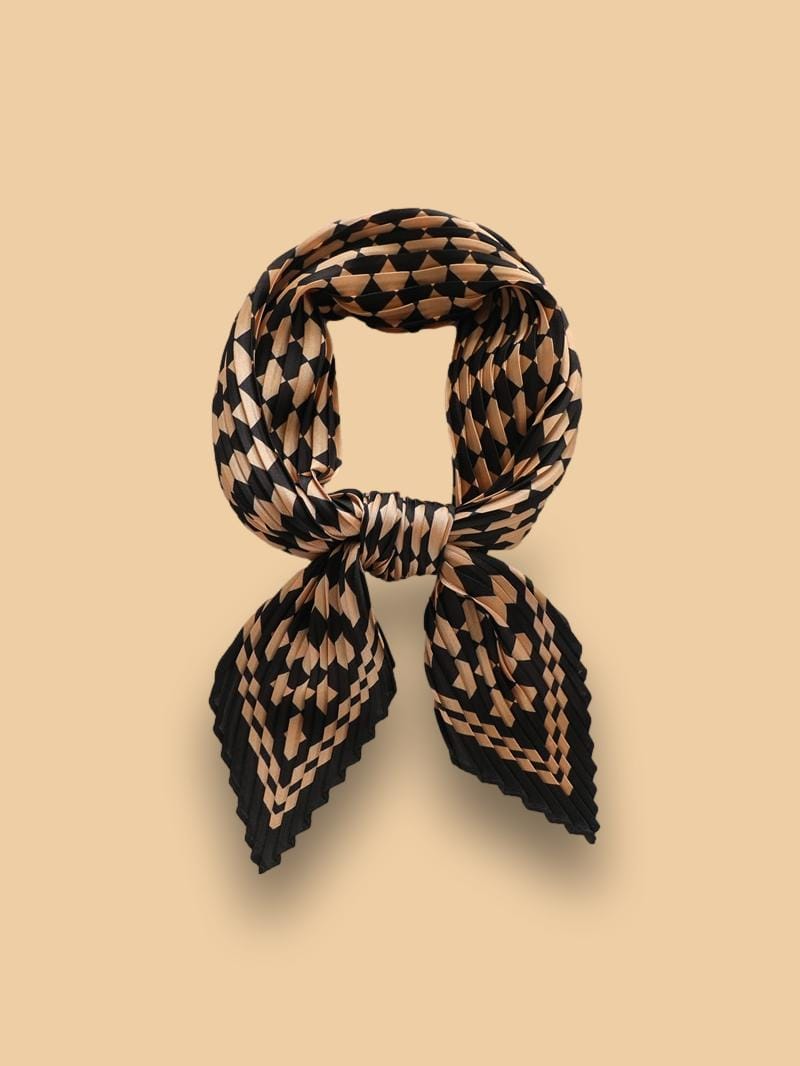
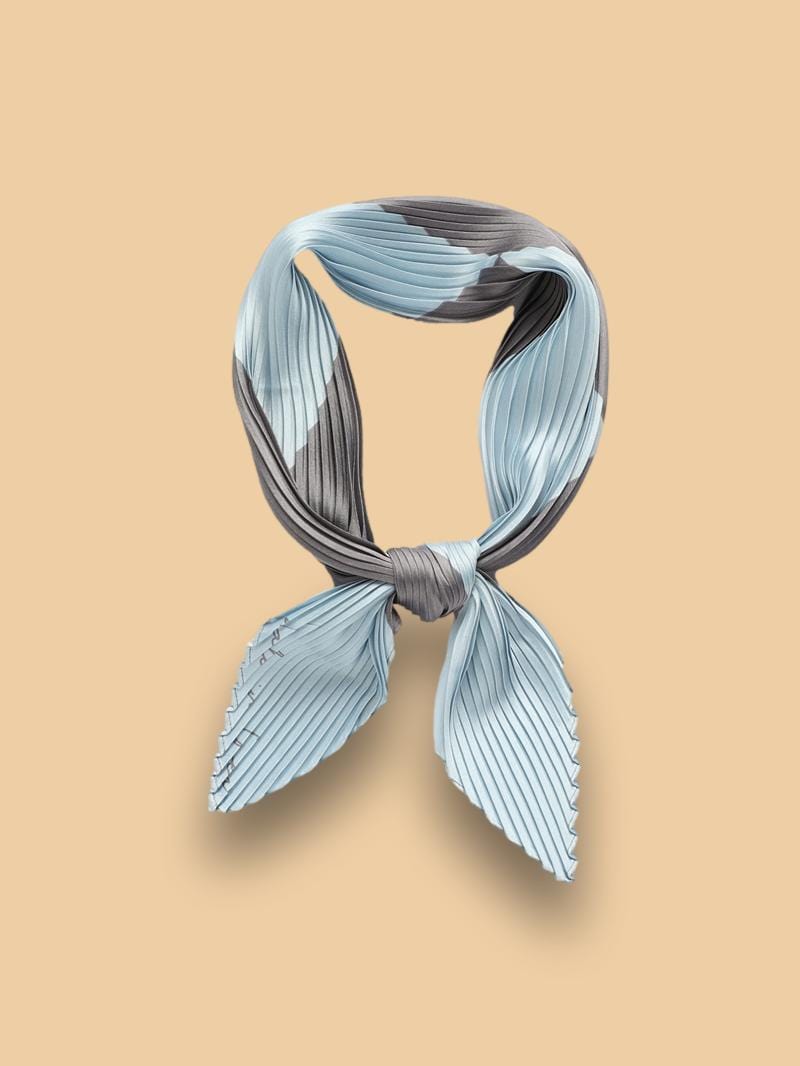
- Pleated scarves: Sophisticated pleated texture
- Boho hair scarves: Romantic and free style
- Our best sellers: Our customers' most popular models
Conclusion: Become a Scarf Expert
The scarf is much more than a fashion accessory - it is a millennial cultural heritage, a tool for personal expression, a smart fashion investment, and a versatile daily companion. From ancient Egypt to contemporary trends, the scarf has traversed centuries, constantly adapting while retaining its timeless essence.
Understanding the history of the scarf, mastering its knotting techniques, choosing the right material for your needs, properly caring for your pieces - this knowledge transforms a simple purchase into a true art of living. Whether you opt for a classic 90x90 square, a practical small format, or a generous large shawl, each scarf tells a story and reveals a facet of your personality.
Our collection of 469 premium satin models offers you the elegance of major fashion houses at affordable prices, with the practicality of machine washing and the durability of an accessory designed to last. It's the perfect balance between tradition and modernity, between refinement and pragmatism.
Ready to enter the fascinating world of the scarf? Explore our complete collection, apply the techniques in this guide, and transform your relationship with this iconic accessory. Your journey begins here.