Introduction: The Art of Hair Care
Are you wondering how to care for your hair? Whether you have straight, curly, coily, or wavy hair, a tailored hair care routine is essential to maintain its health, beauty, and shine.
Healthy hair is the result of a combination of good practices: proper washing, regular hydration, deep nourishment, and protection against external aggressions. Each hair type has its own specific needs!
In this comprehensive guide, discover all the tips, products, and tricks to keep your hair in top shape and reveal its natural beauty.
Also check out our complementary guides on how to protect your hair at night and whether you should tie up your hair at night. 💇♀️✨

-30% discount with code BLOG30
Perfect for protecting your hair 💇♀️
📖 Article Summary
1. Know Your Hair Type

The first step to caring for your hair is to understand its type:
💇♀️ Why Know Your Type?
Each hair type has specific needs. Using unsuitable products can worsen problems (dryness, excess sebum, frizz). Identifying your type allows you to choose the perfectly adapted care!
Straight Hair
Type 1: Often oily
Wavy Hair
Type 2: Between straight and curly
Curly Hair
Type 3: Defined curls
Coily Hair
Type 4: Very textured
〰️ Straight Hair (Type 1)
Often oilier at the roots, they require a light shampoo that removes excess sebum without drying out the ends. Avoid overly rich products that weigh hair down.
🌊 Wavy Hair (Type 2)
They need hydration to prevent frizz and define waves. Light products and styling mousses are your allies. See curly hair overnight.
🌀 Curly Hair (Type 3)
Very prone to dryness, they require a lot of hydration and specific products for curls (creams, leave-ins). Gentle handling is essential.
🔘 Coily Hair (Type 4)
Naturally dry and fragile, they demand intensive care based on nourishing and repairing products (butters, oils). Gentle handling is essential.
📊 Hair Porosity
💧 High Porosity
Hair quickly absorbs moisture but loses it just as quickly. It needs to seal in hydration with oils and butters.
💦 Low Porosity
Moisture has difficulty penetrating. Use light products, heat to open cuticles, and avoid product buildup.
💡 Porosity Test
Place a clean strand of hair in a glass of water:
- ✅ Floats on top: Low porosity
- ✅ Floats in the middle: Normal porosity
- ✅ Sinks to the bottom: High porosity
2. The Importance of Proper Washing

Proper washing is the foundation of an effective hair care routine:
Adapted Shampoo
Sulfate and paraben-free
Lukewarm Water
Never too hot
Frequency
2-3 times a week
Cold Rinse
Closes cuticles
🧴 Choosing the Right Shampoo
Opt for a shampoo that is sulfate and paraben-free, respecting the scalp and lengths. Sulfates are aggressive foaming agents that can dry out hair.
🌡️ Water Temperature
Hot water dries out hair and irritates the scalp. Use lukewarm water for gentle cleansing, then finish with a cold water rinse to close cuticles and add shine.
📅 Washing Frequency
Washing your hair every day strips it of its natural oils. Aim for 2-3 washes per week depending on your hair type. Oily hair may require more, coily hair less.
💆♀️ Massage Technique
Gently massage the scalp with your fingertips (not nails!) for 2-3 minutes. This stimulates blood circulation and promotes hair growth.
💡 Double Shampoo
The first shampoo removes surface impurities, the second cleanses deeply. This technique is particularly recommended if you use many styling products.
3. Hydration and Nourishment

Hydrating and nourishing your hair is crucial for its health:
💧 Hydration vs. Nourishment
Hydration: Providing water to the hair (water-based products, aloe vera, glycerin).
Nourishment: Providing lipids to the hair (oils, butters, proteins).
Both are complementary and essential for healthy hair!
Conditioner
With every wash
1x per week
No rinse
For ends
Internal hydration
Apply conditioner after every wash to hydrate and ease detangling. Focus on lengths and ends, avoid roots.
Once a week, apply a hydrating or repairing mask for deep nourishment. Leave on for 20-30 minutes under a shower cap for better effectiveness.
Creams, milks, or sprays that stay on the hair to hydrate it throughout the day. Essential for curly and coily hair!
Apply a light oil or serum to the ends to prevent split ends and keep them soft. The ends are the oldest and most fragile part of the hair.
Drink enough water (1.5-2L per day)! Internal hydration is just as important as external hydration. A balanced diet rich in vitamins also contributes to healthy hair.

-30% off with code BLOG30
The perfect accessory 👜
4. Essential Oils
Natural oils are precious allies for intensely nourishing your hair:
Nourishing, penetrating
Repairing, shine
Soft, detangling
Strengthening, growth
Nourishing, shine
Moisturizing, penetrating
The star oil! It deeply penetrates the hair fiber to nourish from within. Perfect as an oil bath before shampooing or as an overnight mask.
Morocco's "liquid gold." It repairs, nourishes, and adds shine. Ideal as a finishing touch on ends or as a pre-shampoo treatment.
Known for stimulating growth and strengthening hair. Thick, it can be mixed with other oils for easier application. See grow your hair.
Apply the oil to dry hair, from roots to ends. Leave on for at least 30 minutes (ideally overnight under a satin scarf). Then shampoo twice to rinse thoroughly.
5. Hair Protection

Protecting your hair from damage is essential:
Limit and protect
UV protection
Scarf or satin pillowcase
Rinse and protect
Limit the use of heated styling tools (curling iron, hair dryer). If you do use them, always apply a heat protectant that forms a protective film on the hair.
UV rays damage the hair fiber, making it dry and brittle. Use products with UV protection or wear a hat/scarf during prolonged exposure.
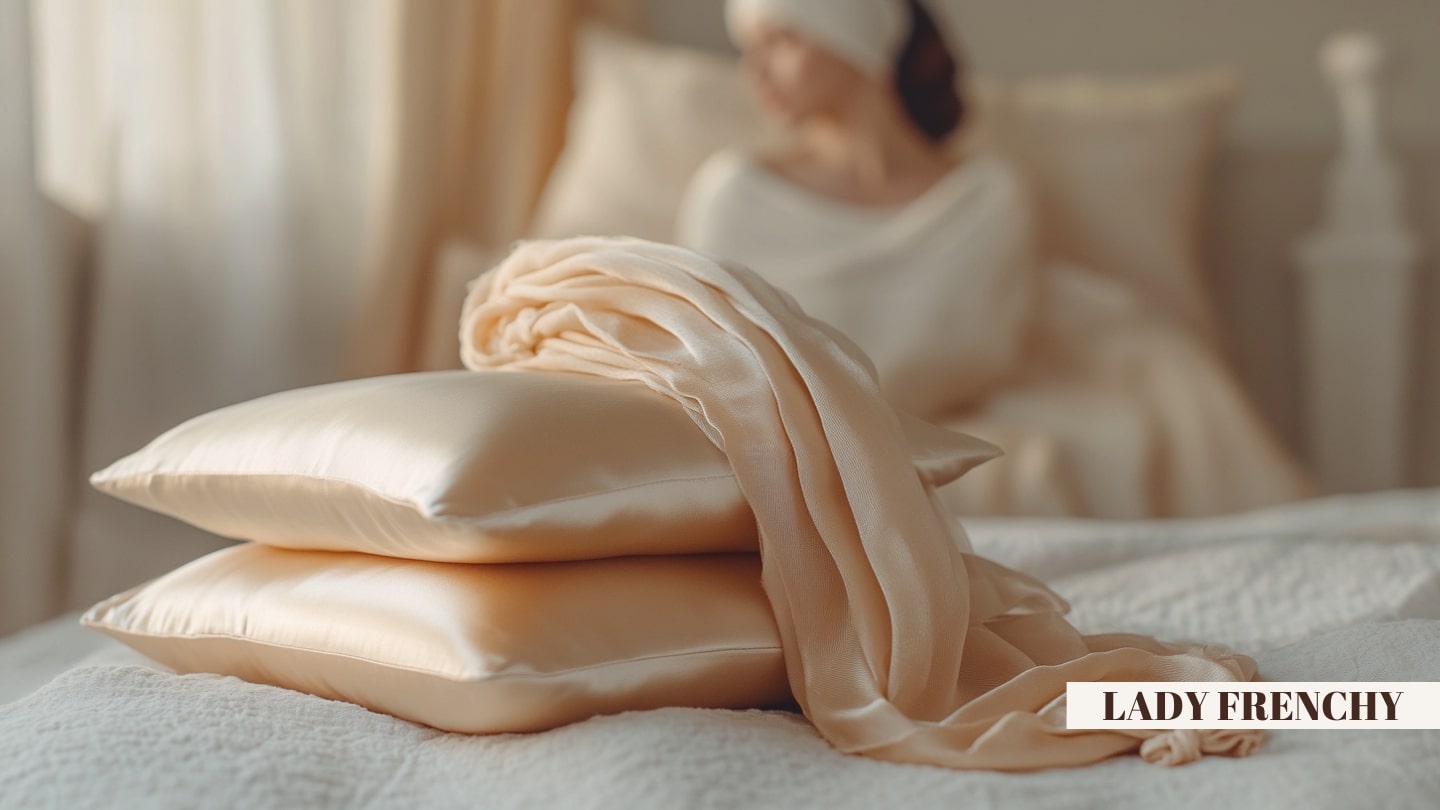
At night, use a satin pillowcase or a scarf to reduce friction and prevent frizz. It's a simple step that makes a big difference! See protect your hair at night.
Before swimming, wet your hair with clean water and apply a protective treatment. Hair saturated with water absorbs less chlorine. Rinse well after swimming.
6. The Scarf: Protective Accessory

The scarf is not just a fashion accessory, it's also an ally for your hair:
Unlike cotton, which absorbs moisture and creates friction, satin and silk glide over the hair, preserving its hydration and preventing breakage. This is the secret to healthy hair!
By wearing a silk or satin scarf at night, you minimize friction with the pillow. This prevents breakage, frizz, and preserves your hairstyles. See tie your hair up at night.
The satin scarf retains your hair's moisture instead of absorbing it like cotton. Your leave-in treatments remain effective all night long!
Curls, blowouts, braids... The scarf preserves the shape of your hairstyle overnight. Wake up with your hair intact!
Scarves add a touch of style to your routine. Available in many colors and patterns, they are also perfect during the day to protect from wind or sun. See scarf in hair.
- 🌙 At night: Wrap your hair in the scarf or use it as a turban
- ☀️ During the day: As a headband, around a bun, or tied to protect from wind/sun
7. Seasonal Routine
Adapt your hair care to the seasons for always healthy hair:
Detox and lightness
Protection and hydration
Repair and nourishment
Intensive nourishment
This is the time to detoxify your hair after winter! Clarifying shampoo, light masks, and introduction of lighter products for the warmer season.
Maximum protection against sun, sea, and swimming pools. Hydrating sprays, protective oils, hat/scarf. Rinse your hair after each swim.

-30% off with code BLOG30
Perfect for protecting your hair 🌸
8. Mistakes to Avoid

To preserve your hair's health, avoid these common mistakes:
Split ends should be removed every 2-3 months. If you don't trim, they travel up the hair shaft and damage the entire hair.
Products containing sulfates or parabens can be harsh, especially for fragile or color-treated hair. Read labels and choose gentle formulas.
Washing daily disrupts the natural balance of the scalp and removes protective sebum. Space out shampoos according to your hair type.
Before using heated tools or swimming, always apply a protective treatment. Prevention is key to healthy hair!
A poor diet weakens hair. Consume foods rich in vitamins (A, B, C, E), iron, zinc, and protein to strengthen its structure.
Wet hair is more fragile and elastic. Use a wide-tooth comb and gently detangle from ends to roots.
9. Conclusion
Taking care of your hair is a daily investment that pays off:
- 💇♀️ Know your type: Adapt your care to your hair
- 🧴 Proper washing: Gentle shampoo, lukewarm water, 2-3x/week
- 💧 Hydration: Conditioner, masks, leave-in
- 🥥 Nourishment: Natural oils, oil baths
- 🛡️ Protection: Heat, sun, night, chlorine
- 🧣 Scarf: The satin ally for night and day
With these tips and an adapted routine, your hair will be healthy and radiant!
Explore our satin scarf collection to protect your hair and discover all our models in the complete collection! 💇♀️✨
To go further, discover what care for dry hair and how to protect your hair at night.